Secure Pool Edges That Contain Water Properly
Aldos Pool Plastering repairs and replaces damaged pool coping for homeowners in Houston.
Loose or cracked coping allows water to seep behind the pool shell and undermines the deck surface over time. In Houston, where temperature swings cause expansion and contraction, coping materials can pull away from the pool edge or develop cracks that widen with each season. You may notice water draining into gaps along the pool perimeter or sections of coping that shift when you step on them.
Aldos Pool Plastering removes damaged coping, cleans the bond beam, and installs new materials that match or upgrade your existing pool edge. We work with natural stone, precast concrete, and brick coping depending on your pool style and budget. Properly installed coping directs water into the pool and provides a stable edge for swimmers to grip.
If your pool coping shows cracks or feels unstable, schedule a coping repair consultation with Aldos Pool Plastering in Houston.
Why Coping Repairs Improve Pool Safety and Structure
We inspect your pool coping to determine whether individual pieces need replacement or if the bond beam underneath has deteriorated in Houston. Damaged sections are removed, the surface is cleaned and prepped, and new coping is set in mortar with proper drainage slope. Joints are sealed to prevent water infiltration.
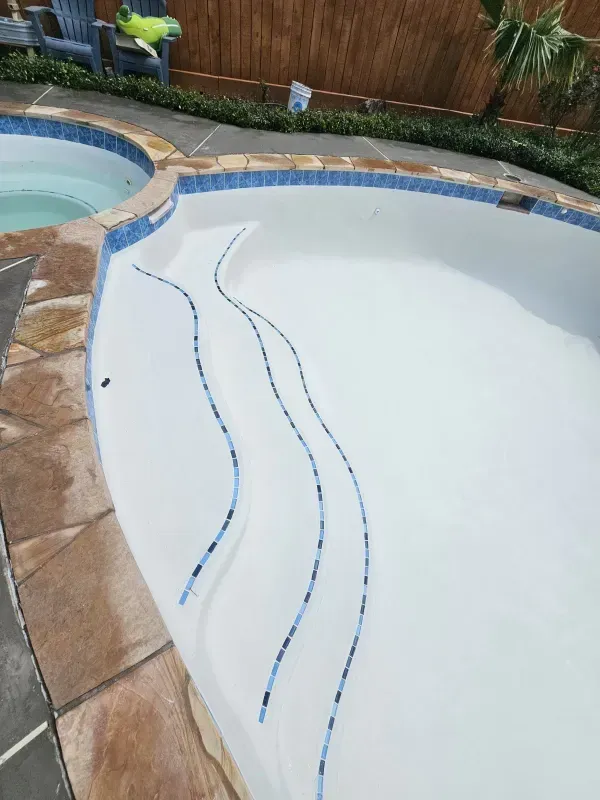
After repairs, the pool edge feels solid underfoot and water no longer seeps into gaps between the coping and deck. The coping sits level and flush with the surrounding surface, eliminating trip hazards and sharp edges. Water flows into the pool instead of behind the shell, which protects both the pool structure and the deck.
Coping repairs work well when the bond beam is intact and only the surface material has failed. If the beam itself has cracked or shifted, structural repairs must be completed first. We do not reset coping over unstable or deteriorating bond beams, as the new material will fail quickly under those conditions.
Pool owners in Houston typically want to know why coping fails, how repairs integrate with other pool work, and what materials last longest in this climate.
What You Should Know Before Repairing Pool Coping
Aldos Pool Plastering handles pool coping repairs throughout Houston, addressing loose or cracked edges before they lead to larger structural issues. If your coping needs attention or you are planning a pool renovation that includes edge upgrades, contact us to schedule a coping repair consultation.