
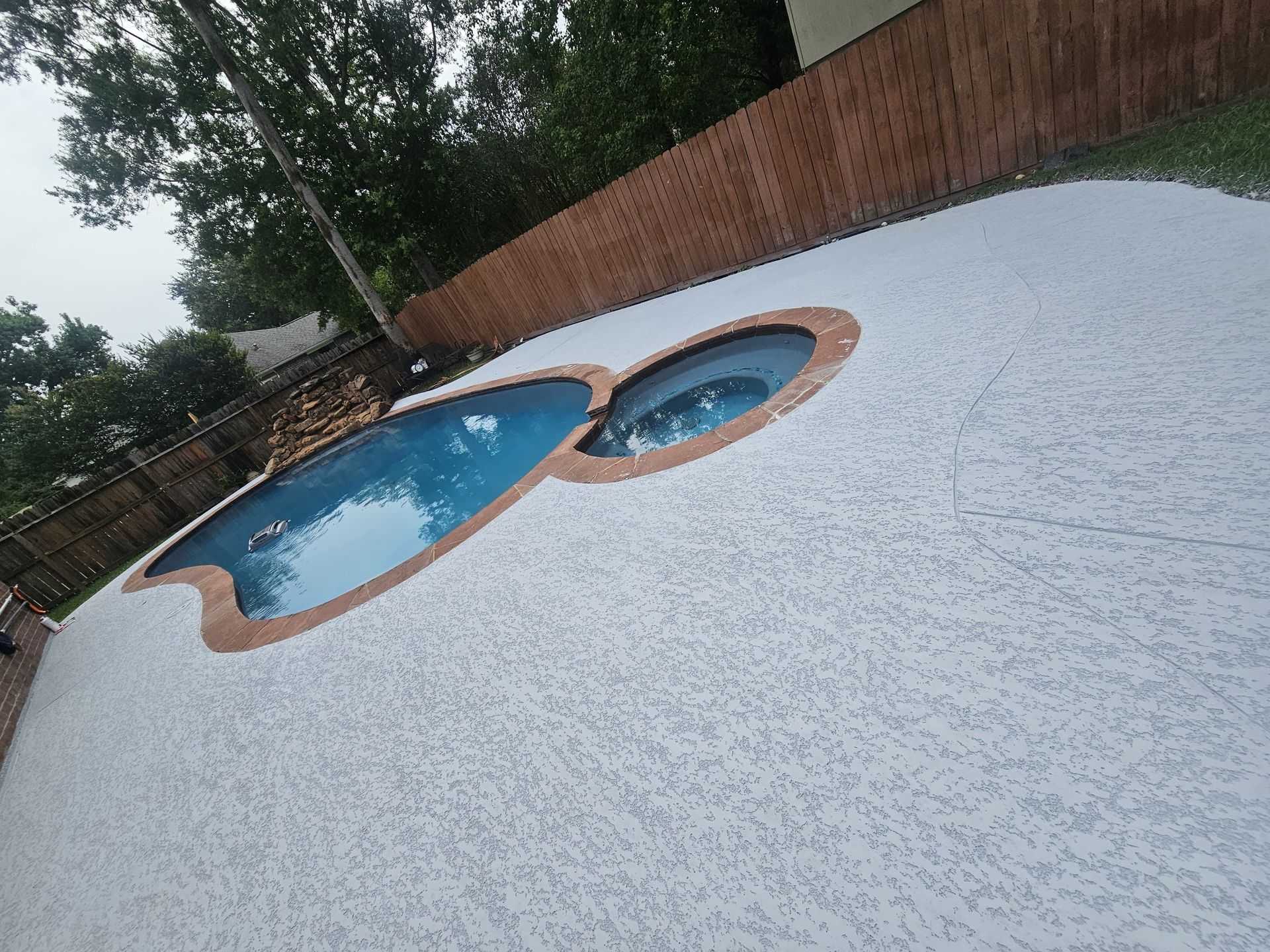
Smooth Plaster Surfaces That Seal and Protect
Aldos Pool Plastering removes worn plaster and applies fresh finishes for pools throughout Houston.
Old plaster develops rough patches, stains, and visible pitting that make your pool uncomfortable to use and harder to keep clean. In Houston, where pools stay in use most of the year, plaster wear happens faster than in cooler climates. You may notice discoloration along the waterline or areas where the plaster feels gritty against your feet.
Aldos Pool Plastering removes the existing plaster layer, preps the underlying surface, and applies a new finish designed to create a watertight, smooth interior. We work with standard white plaster and colored finishes that resist staining and provide a clean appearance. Proper surface prep is key to preventing premature failure of the new plaster.
If your pool shows surface loss or rough areas that no longer respond to cleaning, request a replastering evaluation and timeline from Aldos Pool Plastering in Houston.
What Happens When You Replaster a Pool Interior
We drain your pool, chip away the old plaster, and inspect the underlying shell for cracks or structural issues in Houston. Any needed repairs are completed before we apply a bonding layer and hand trowel the new plaster to a uniform thickness. The plaster cures underwater for the first few days to prevent cracking.
After replastering, the pool interior feels smooth to the touch and the water stays clearer because the new surface does not shed particles or hold onto algae the way worn plaster does. Stains from metals or organic material no longer cling to rough spots, and the pool is easier to vacuum and brush during regular maintenance.
Replastering typically takes three to five days from start to refill, depending on the size of your pool and whether additional repairs are needed. We do not replaster over active leaks or structural damage, as those issues will compromise the new finish. If your pool has cracks or suspected leaks, those must be addressed first.
Pool owners in Houston often want to know how long new plaster lasts, what finish options are available, and how soon they can use the pool after the work is done.
Homeowners Usually Ask These Before Replastering
Aldos Pool Plastering provides replastering services for aging pools throughout Houston that show discoloration, rough texture, or surface loss. If your pool interior feels uncomfortable or no longer holds a clean appearance, contact us to schedule a replastering consultation and project timeline.